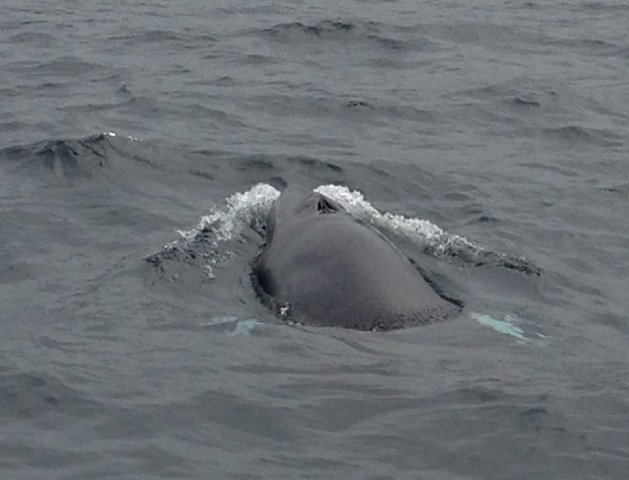
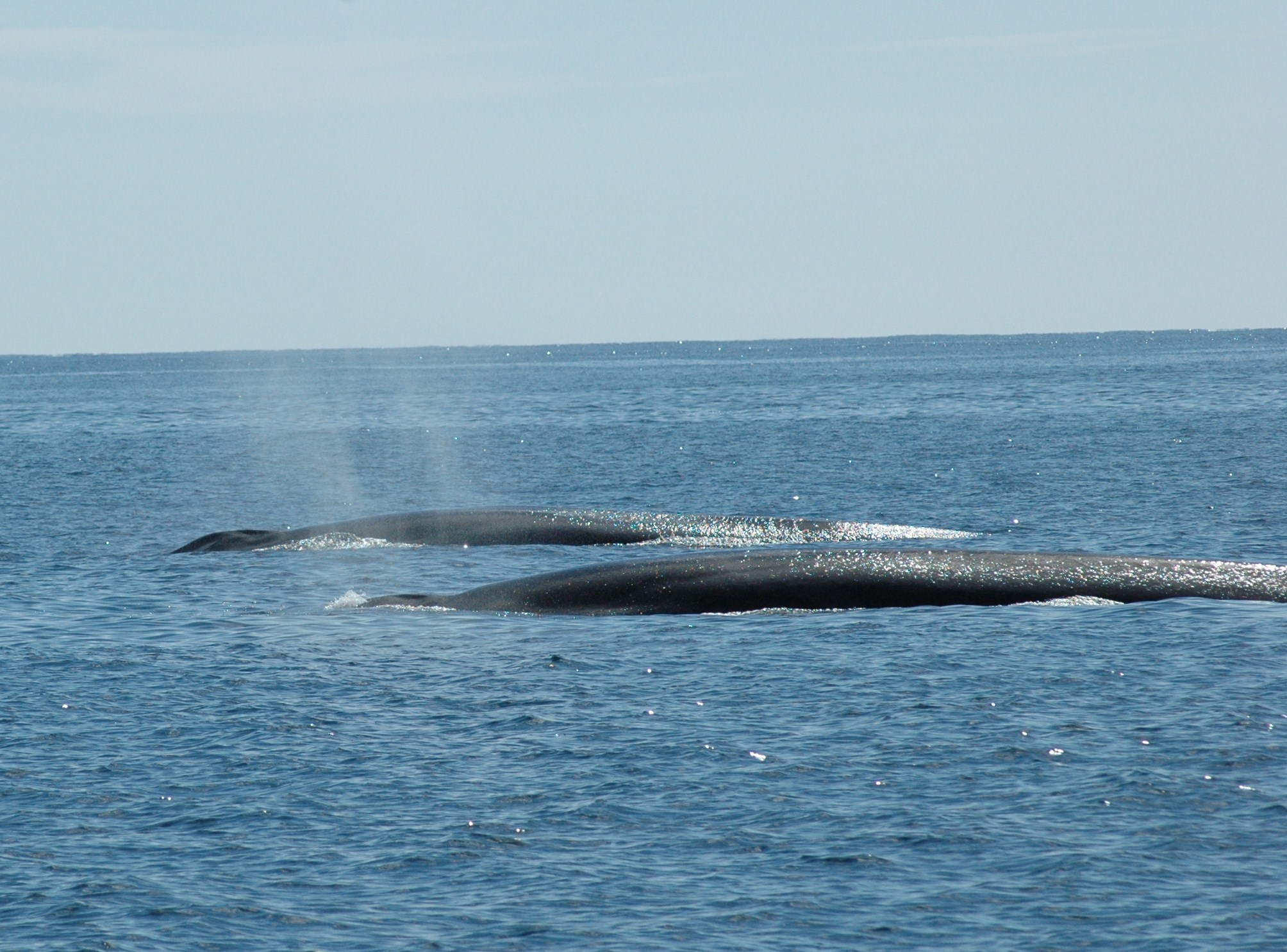
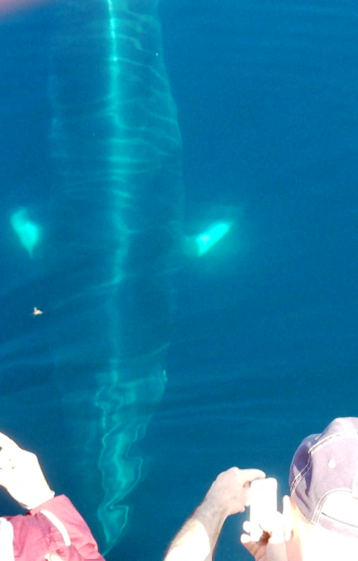
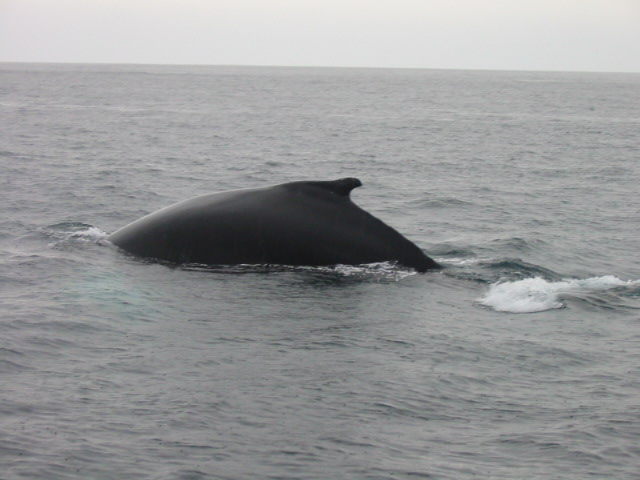
A rare and mysterious visitor in Walvis Bay
UK politicians united in call on Japan to end commercial whaling
First published by Tom Quinn of The International Fund for Animal Welfare in association with the launch of their new report “The economics of Japanese whaling”…
**********
MPs and Peers from across the political spectrum in Britain have called upon Japan to end its cruel and unnecessary whaling programme. More than 30 Parliamentarians attended the launch of our new report, ‘The Economics of Japanese Whaling’ in the House of Commons, all united in their opposition to this outdated, costly and unsustainable practice.
At our event, the International Fund for Animal Welfare Japan representative Naoko Funahashi led attendees through an engaging presentation outlining the stark reality that Japanese whaling only continues to be viable due to a sizeable Japanese government subsidy, including funds donated for tsunami relief following the devastating earthquake in 2011. She highlighted national polls demonstrating that the majority of Japanese people are indifferent to whaling and that the vast majority oppose the use of their taxes to prop up this dying industry.
Naoko also provoked much amusement as she revealed clear statistics demonstrating the lack of market for whale meat in Japan. Chicken, pork, beef and even horsemeat are more popular than whale for Japanese consumers. For a nation gripped by the news that horsemeat has been retailing as beef in many processed food products this provided light relief from the grim picture Naoko painted of a pointless industry that continues to hunt these sentient and majestic creatures for no discernable benefit.
Jointly hosted by Liberal Democrat Adrian Sanders MP and Conservative Justin Tomlinson MP, our event saw Labour Shadow Minister Tom Harris MP confirm his party’s unequivocal opposition to whaling. Tom has joined IFAW on our Song of the Whalescientific research vessel, watching minke whales off the coast of Iceland, and so he kindly spoke in glowing terms of the scientific rigour on which we base all of our campaign work.
He was also quick to praise the commitment of his opposite number, Environment Minister Richard Benyon, to ending commercial whaling. IFAW works closely with the Minister on this issue, but unfortunately due to personal reasons he had to pull out of speaking at our event. Nevertheless he confirmed the Government’s opposition to whaling in a letter to IFAW, stating that “there is absolutely no justification for this whaling and the UK will continue to oppose it”.
All the MPs who attended had their photo taken endorsing our report, and a great many were successful in promoting their support on this issue in their local media. The message from our event was clear – no matter what political differences they may have, politicians from all parties in the UK are united in their opposition to commercial whaling.
**********
National Whale and Dolphin Watch – Sea Watch Foundation
Sea Watch Foundation
National Whale and Dolphin Watch
27th July – 4th August 2013
National Whale and Dolphin Watch, Britain’s largest cetacean watch is fast approaching and we’re hoping to make it bigger than ever – please help us publicise the event by posting it on your events pages and by printing off copies of the attached poster and putting them up in your local region.
More information at www.seawatchfoundation.org.uk or sightings@seawatchfoundation.org.uk
How to get involved
Poster
Naval Exercises Kill Cetaceans…It’s official
On June 9, 2008, at least 60 dolphins stranded along the coast of Cornwall, England, in what was by far the largest common dolphin mortality ever seen in British waters. For hours, rescuers tried to lead them back to sea — often unsuccessfully, as some of the animals were panicked and others just milled about in tight circles, resistant to saving. The forensic investigation that followed involved 24 experts
(c) Live Science
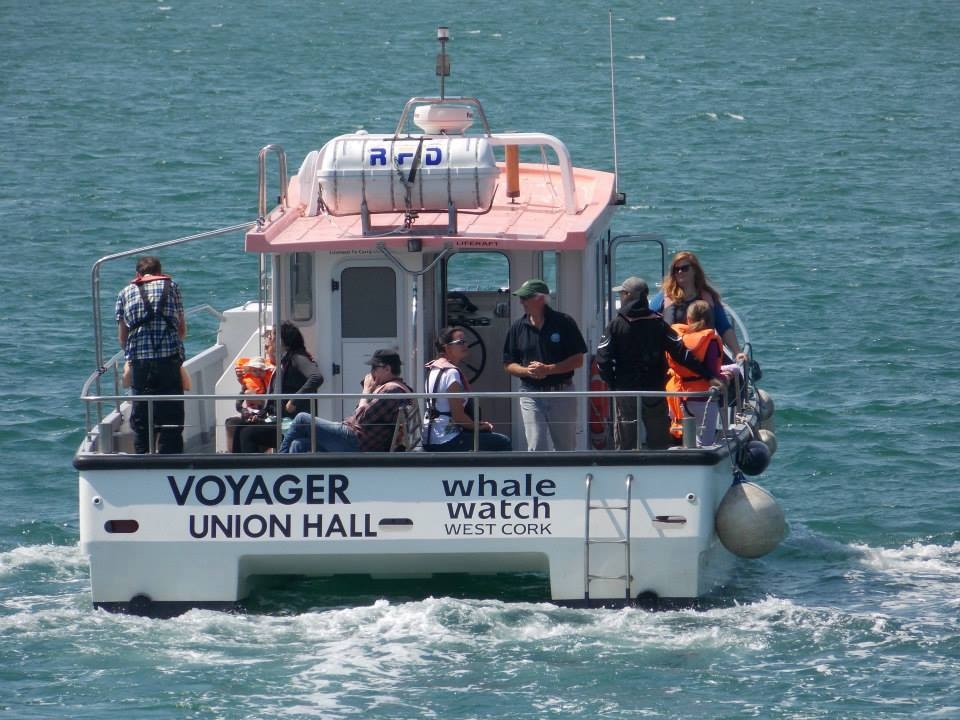
Nic Slocum of Whale Watch West Cork and Whales Worldwide appointed to Chair of Planet Whale steering committee of the sustainable whale watching partnership
Dr Nic Slocum, Managing Director of the Ireland based whale watch operator Whale Watch West Cork has been appointed to the chairmanship of the steering committee of the Planet Whale responsible whale watching partnership as of May 2013.
This role will entail pulling together a team of experts from the responsible whale watching partnership who will look at such diverse issues as codes of conduct at the species level for different activities such as swim with programmes, education within the whale watching industry and working with the IWC standing committee for whale watching in the launch of their new five year plan for whale watching and the implementation of their proposed online whale watching guide.
International Whaling Commission (IWC) invites leading Ireland based whale watch operator and pioneer of sustainable whale watching to attend whale watch operators workshop in Brisbane, Australia…
Dr Nic Slocum, Managing Director of Whale Watch West Cork and chairman of the steering committee of the Planet Whale responsible Whale Watching Partnership, has been invited to attend the IWC Whale Watch Operator’s Workshop on 24th-26th May in Brisbane, Australia.
The IWC is drawing on operator expertise from around the globe during this two day workshop to assist in the implementation of it’s five year plan for sustainable whale watching. This will cover issues such as the use of whale watching boats to gather meaningful scientific data; systems for monitoring adverse impact of whale watching on cetacean populations; how to share expertise between whale watching nations, building responsibility for sustainable whale watching within the industry and the creation and development of an adaptive management framework.
Ryan Wulff, NOAA, Chair of the IWC Working Group on Whale Watching said “…we’re looking forward to your input and making real progress with implementation of the five-year plan and development of the online whale watch handbook…”
The IWC has been considering the issue of sustainable whale watching since 1975 and adopted its first resolution on global whale watching in 1993. In 1998 a standing whale watching sub-committee was set up under the existing scientific committee and has since addressed a range of matters concerning the sector. Much of its work has focussed on better identifying, assessing and understanding the impact of whale watching on whale communities both large and small.
“…I am delighted to attend this important international workshop and contribute some of the momentum we have achieved over the past nine years with Whale Watch West Cork through the development of species specific codes of conduct. With whale watching becoming an increasingly important and unique tourism attraction off the south coast of Ireland, it is imperative to draw on the expertise of others around the globe. This will ensure we develop a workable framework for best practice down to the species level that may be applied as a benchmark for those developing whale watching operations for the first time…” Dr Slocum said.
About Whale Watch West Cork
Whale Watch West Cork is dedicated to providing our customers with a safe, comfortable and educational whale and dolphin watching experience. We seek to impart detailed knowledge on the marine mammals and other wildlife we encounter and on the wider issues of marine conservation through informed commentary with special emphasis on the current threats facing these unique animals and their fragile environment.
About Planet Whale
Planet Whale is the global community that will change the way we view whales and dolphins forever. By harnessing the passion and ideas of individuals, we will achieve more to protect and defend our oceans than ever before.
About the IWC
The International Whaling Commission is an Inter-Governmental Organisation tasked with the conservation of whales and the management of whaling. It is set up under the International Convention for the Regulation of Whaling signed in 1946. The Commission has a current membership of 89 Governments from countries around the World.
The Humpback Whales of Baltimore
Baltimore, West Cork has long been the whale and dolphin watching capital of West Cork with a season spanning April through December. Sightings include species from the smaller minke whales and common dolphins right up to the mighty fin whale and humpback whale. In addition, basking sharks, leatherback turtles, Atlantic sunfish, harbour porpoises and seals all make up the regular marine sightings that we get off this part of the southwest coast with Whale Watch West Cork. Occasional sightings of rarer species like Risso’s dolphins make up the portfolio of marine varieties we get in these rich waters and around the islands of Roaringwater Bay and to the east.
During the 2012 season we have documented a stunning array of sightings of iconic species. Lunge feeding minke whales, breaching basking sharks, large aggregations of harbour porpoises, large adult leatherback turtles and “super groups” of common dolphins have all contributed to this year being one of the best sightings years we have had for the past half decade. This was only marred when Baltimore was in the news after a young Fin Whale stranded in the harbour mid summer. Taking several days to succumb this animal was a distressing sight as we all had to endure the spectacle of a large marine mammal during it’s death throes.
Ever the whale watching capital of the southwest of Ireland, Baltimore has been back in the whale news for all the right reasons this Autumn. From the beginning of November, we have been having regular sightings of both Fin and Humpback whales both in the harbour offing and further east and south of this part of the West Cork coastline between The Galley Head and Cape Clear Island.
For the avid whale and dolphin enthusiast there have been some fabulous opportunities for whale watching, both from the boat Voyager and from the strategic outlooks on land. Some of the best land based sightings have been from our observatory overlooking Castlehaven and Rosscarbery Bays and from Toe Head which overlooks Barlogue Bay and into the southern reaches of Baltimore Bay. Jaw dropping displays of lunge feeding of small groups of fin whales and humpback whales have been recorded beneath equally impressive flocks of gannets, kittiwakes and other gulls wheeling and screeching as they feed on bait balls of sprats driven to the surface by hungry mouths beneath the surface…not a good time to be a fish in these waters!
Of all the behavioural activities we observe, breaching (leaping out of the water) is one of the most spectacular. This season, 2012 has been the “year of the breach”. A poorly understood activity which may be associated with feeding or breeding behaviour. From early season breaching basking sharks to, only the second time we have recorded it in West Cork, breaching sunfish in August. Large groups of Porpoises breaching as they feed inshore in the Autumn…this was only surpassed by the multiple breaches we observed in mid August of an adult minke whale that had been feeding off the mouth of Baltimore Harbour. This season of breaching behaviour has culminated in a humpback whale breaching in Baltimore Bay and recorded by photographer Simon Duggan of Baltimore
The fin whale and humpback whales off Baltimore have provided a lovely end to a stunning season of cetacean activity.
Humpback Whale video
Ends
**********
Deutsch Übersetzung
Die Buckelwale von Baltimore
Baltimore ist seit langem die Wale und Delfine beobachten Hauptstadt von West Cork mit einer Saison Spanning April bis Dezember. Species Sichtungen von den kleineren Zwergwale und Delfine bis hin zu den mächtigen Finnwal und Buckelwal. Riesenhaie, Lederschildkröten, Atlantic Mondfisch, Schweinswale und Robben alle bilden die regulären marine Sichtungen, dass wir aussteigen diesen Teil der Südwestküste. Gelegentliche Sichtungen seltener Tierarten wie Rundkopfdelphine bilden das Portfolio von marine Sorten erhalten wir in diesen reichen Gewässern und um die Inseln Roaringwater Bay und im Osten.
Während der Saison 2012 haben wir eine beeindruckende Auswahl an Sichtungen von ikonischen Arten dokumentiert. Lunge Fütterung Zwergwale, Verletzung Riesenhaie, große Ansammlungen von Schweinswalen, große Erwachsene Lederschildkröten und “super Gruppen” Gemeine Delfine haben alle in diesem Jahr als einer der besten Sichtungen Jahren haben wir im letzten halben Jahrzehnt hat beigetragen haben. Dies wurde nur getrübt, wenn Baltimore war in den Nachrichten nach einem jungen Finnwal im Hafen gestrandet. Unter mehreren Tagen auf dieses Tier erliegen war eine erschütternde Anblick, wie wir alle, um das Schauspiel eines großen Meeressäuger während ihres Todeskampfes ertragen.
Schon der Walbeobachtung Hauptstadt der südwestlich von Irland hat Baltimore zurück in den Wal-Nachrichten für alle den richtigen Gründen in diesem Herbst gewesen. Ab Anfang November haben wir mit regelmäßigen Sichtungen von beiden Finn-und Buckelwale sowohl im Hafen offing und weiter östlich und südlich von diesem Teil der West Cork Küste zwischen The Galley Head und Cape Clear Island.
Für den passionierten Wal-und Delfin-Enthusiasten gibt es einige fantastische Möglichkeiten für die Walbeobachtung, sowohl vom Boot Voyager und den strategischen Perspektiven auf dem Land. Einige der besten landgestützten Sichtungen wurden von unserer Sternwarte Blick Castlehaven und Rosscarbery Bays und Toe Head, die Barlogue Bay überblickt und in die südlichen Ausläufer von Baltimore Bay gewesen. Jaw dropping Displays Ausfallschritt Fütterung von kleinen Gruppen von Finnwale und Buckelwale haben unter ebenso beeindruckende Schwärme von Basstölpel, Dreizehenmöwen und anderen Möwen kreisten und Kreischen, als sie ernähren Köder Kugeln Sprotten an die Oberfläche getrieben von hungrigen Münder unter der Oberfläche erfasst … nicht ein guter Zeitpunkt, um einen Fisch in diesen Gewässern sein!
Von all den Verhaltensstörungen Aktivitäten, die wir beobachten, ist verletzt (springt aus dem Wasser) eine der spektakulärsten. In dieser Saison hat 2012 war das “Jahr der Verletzung” einer schlecht verstandenen Tätigkeit, die mit der Fütterung oder Brutverhalten verbunden sein können. Von Beginn der Saison verletzt Riesenhaie auf, erst das zweite Mal haben wir es aufgenommen haben in West Cork, Verletzung Mondfisch im August. Große Gruppen von Schweinswale Verletzung, wie sie Küstenfischerei füttern im Herbst … das war nur durch die zahlreichen Verstöße wir Mitte August von einem Erwachsenen Zwergwal, dass hatte Fütterung vor der Mündung des Baltimore Harbour beobachtet übertroffen. In dieser Saison der Verletzung Verhalten wurde in einem Buckelwal Verletzung in Baltimore Bay mündete und aufgezeichnet wurde vom Fotografen Simon Duggan von Baltimore
Der Finnwal und Buckelwale off Baltimore haben eine schöne Ende einer atemberaubenden Saison Tätigkeit vorgesehen is
Ende
**********
A whale of a discovery: New sensory organ found in rorqual whales
May 2012. Scientists at the University of British Columbia and the Smithsonian Institution have discovered a sensory organ in rorqual whales that coordinates its signature lunge-feeding behaviour – and may help explain their enormous size.
Rorqual whales
Rorquals are a subgroup of baleen whales – including Blue, Fin, Minke and Humpback whales. They are characterized by a special, accordion-like blubber layer that goes from the snout to the navel. The blubber expands up to several times its resting length to allow the whales to engulf large quantities of prey-laden water, which is then expelled through the baleen to filter krill and fish.
The study, to be featured on the cover of the journal Nature, details the discovery of an organ at the tip of the whale’s chin, lodged in the ligamentous tissue that connects their two jaws.
Samples collected from Icelandic whaling
Samples were collected from recently deceased Fin and Minke whale carcasses captured as part of Icelandic commercial whaling operations. Commercial whaling in Iceland resumed in 2006 and quotas are determined annually by its government.
Scanning of the whale’s chin revealed a grape fruit-sized sensory organ, located between the tips of the jaws, and supplied by neurovascular tissue.
The research team was assisted by technicians at FPInnovations, the owner of Canada’s only X-ray computed tomography (XRCT) machine large enough to accommodate the massive specimens. Used to scan giant logs, the XRCT machine provides a three dimensional map of the internal structure of whale tissues.
Coordinates lunge feeding
“We think this sensory organ sends information to the brain in order to coordinate the complex mechanism of lunge-feeding, which involves rotating the jaws, inverting the tongue and expanding the throat pleats and blubber layer,” says lead author Nick Pyenson, a paleobiologist at the Smithsonian Institution, who conducted the study while a postdoctoral fellow at UBC. “It probably helps rorquals feel prey density when initiating a lunge.”
Catches 10 kilograms of Krill in each gulp
A Fin whale, the second longest whale on the planet, can engulf as much as 80 cubic metres of water and prey – equal or greater than the size of the whale itself – in each gulp in less than six seconds. A previous study by co-author Jeremy Goldbogen showed that a Fin whale captures 10 kilograms of krill in each gulp in order to sustain its average 50-ton body mass. Goldbogen, who conducted both studies while a PhD student at UBC, is now a scientist with the Cascadia Research Collective in Olympia, Washington.

A new sensory organ, found within the chin of rorqual whales, is responsible for coordinating the biomechanics of their extreme lunge-feeding strategy. Left, a fin whale after lunging; right, anatomy of the new sensory organ. Art by Carl Buell, arranged by Nicholas D. Pyenson / Smithsonian Institution.
“In terms of evolution, the innovation of this sensory organ has a fundamental role in one of the most extreme feeding methods of aquatic creatures,” says co-author and UBC Zoology Prof. Bob Shadwick.
“Because the physical features required to carry out lunge-feeding evolved before the extremely large body sizes observed in today’s rorquals, it’s likely that this sensory organ – and its role in coordinating successful lunging – is responsible for rorquals claiming the largest-animals-on-earth status,” Shadwick adds.
“This also demonstrates how poorly we understand the basic functions of these top predators of the ocean and underlines the importance for biodiversity conservation.”
The study was supported by grants from the Natural Sciences and Engineering Research Council of Canada and the Smithsonian Institution. FPInnovations’ XRCT machine was a joint project with the University of Northern British Columbia and funded by the Canada Foundation for Innovation and the BC Knowledge Development Fund.
Published first in Wildlife Extra
North Atlantic right whale spotted off Cornwall?
North Atlantic right whales are usually found off the East Coast of USA.
Cornish mystery whale could be one or the most endangered species- scientists appeal for more sightings
May 2012. Sightings of a large whale off the Cornish coast near Lizard Point are causing a stir amongst scientists who say it could have been a North Atlantic right whale, one of the most endangered species in the world. Other possibilities are the Gray whale which went extinct in Atlantic Waters in the 17th century, though one was seen in 2010 in The Mediterranean, or a humpback whale.
Peter Evans, Research Director of the marine mammal research and conservation charity Sea Watch has described the sightings as ‘exciting and intriguing’. He is appealing for anyone else who has seen the whale to contact Sea Watch – a national marine conservation charity and holder of the largest data base of whales and dolphins in Europe – with descriptions, and, if possible, pictures.
Since the whale was seen in April discussions between local experts, eye witnesses and the marine research and conservation charity Sea Watch suggest that the North Atlantic right whale is the most likely species.
The whale was seen off the coast of Cornwall in April 2012.
Seen off The Lizard
The whale was seen by a group of teenage anglers, Jim Cave, a local resident, and by a canoeist off Hot Point, just east of Lizard Point. It may also have been the same one seen in the same area last autumn.
Sea Watch Research Director Peter Evans has described the sightings as ‘exciting and intriguing’. He is appealing for anyone else who has seen the whale to contact Sea Watch – a national marine conservation charity and holder of the largest data base of whales and dolphins in Europe – with descriptions, and ,if possible, pictures.
Local expert
Rory Goodall, of Elemental Tours, of Penzance, and a Sea Watch approved boat operator, has been helping collect local data on whales, dolphins and porpoises for 20 years and has spoken to those who saw the whale. He has checked the sea maps and confirms there is a sea shelf which plunges down to from 8 to 30 m in the area where the whale was spotted – plenty of depth for one to feed. After some weeks locating witnesses and getting descriptions, Dr Evans agrees with Jim Cave and Rory Goodall that it does indeed sound very like a North Atlantic right whale.
North Atlantic right whale
Dr Evans says: “We cannot be certain, but from the description of a large whale, with barnacles towards the front, no dorsal fin, and a wide tail, it does sound like a North Atlantic right whale. There have only been a handful of sightings of the species in European seas over the last 50 years, the latest includes off the Azores in 2009, and some distance north of Shetland in July 2000.
Gray whale?
“The only other possibilities are Gray whale or humpback whale. Gray whales also have no dorsal fin. However, they became extinct in the North Atlantic in the seventeenth century – then to everyone’s surprise one was spotted in the Mediterranean two years ago, first off Israel and then in south-east Spain. It was presumed that it had come from the North Pacific, entering the Atlantic via the Arctic Ocean now that it has become navigable as a result of ice melt caused by global warming.
“Humpback whales have a dorsal fin but this varies in size and it might not have been visible at the time. Humpback sightings are increasing around the British Isles, though mainly off Scotland. The last sightings off Cornwall were in July 2011 when a juvenile was seen entangled in a fishing net near St Ives, and in August 2010 when a young one live stranded and died in the same area.”
The first North Atlantic right whale seen in the Azores since 1888 was spotted in 2009.
The mystery whale was sighted when Church Cove garden plant breeder Jim Cave was out on a rare angling trip off Hot Point (SW717123), just east of Lizard Point. It was around midday on April 8th when he was alerted by shouts from some young anglers down on the rocks.
Jim said: “I looked up when I heard them shouting’ it’s a whale’. I had a good view but did not see the head. Just the back that was breaking the surface smoothly and quite long and not a lot above sea level. Then the tail appeared straight up into the air and very large- 2m -and smoothly disappeared. The tail was forked but not deeply and I saw some barnacles at the front end.”
Rory Goodall says: “I was really excited when I heard of the sighting from my old family friend Jim Cave. We have various kinds of whales visiting us here in the south west but I immediately knew from Jim’s description that this was something very different.
No dorsal fin
“We discovered that on the previous day, the 7th of April, a quarter of a mile away at Lizard Point, local kayaker, Daniel Wood was surprised by a loud hissing noise. On turning, he saw the spray from a whale’s blow, and watched as the animal rose and cruised past him, not forty feet away. He was expecting to see a dorsal fin but to his surprise there didn’t appear to be one. From all the evidence gathered it seems likely that it was the same animal seen on both days and that it was most likely to be, despite its rarity, a Northern Right Whale.”
The population of North Atlantic right whales in the eastern North Atlantic is now extremely small due to centuries of over-exploitation. Of the handful of records, most are from the Iberian Peninsula south to the Canaries. Although the species can migrate as far north as Iceland, the majority used to occur much further south which is why they could easily be hunted – human populations living around the shores of the Bay of Biscay and Southern Britain (possibly also the southern North Sea) could readily go out and find them – hence one of their alternative names, ‘Biscayan whale’.
Article was first published in Wildlife Extra News
Lovely sightings off West Cork in balmy Spring weather…
This last week has afforded us some lovely sightings in relatively calm seas…but the sun was shining…most of the time!
Good Minke Whale activity with 2/3 animals feeding actively and attracting large numbers of Gannets and Manx Shearwaters. Minke whale activity was also reported by Rory Jackson over a week ago south of Toe Head while he was delivering a yacht west of Castletowshend. We had a single animal breach south of the Kedges a week ago. Animals seen as far apart as Rosscarbery Bay in the east to Cape Clear in the west.
Basking Shark numbers increasing nicely in this sunny weather. Some big fellas around too. In Roaringwater Bay and south of the islands. These leviathans also draw lots of interest being the second largest fish in the world and reaching lengths locally up to 7 metres in length.
Lovely Common Dolphin activity. These were also reported by Michéal Cottrell having been seen south of Spain Point some days ago. Encountered a small group of 5 animals well south of The Kedges yesterday having been alerted by the Gannet activity in the area to the south. This is early for Common Dolphins as we don’t usually see them in any numbers inshore until late July and into August.
Good Harbour Porpoise numbers being spotted throughout the area. These shy little whales always create interest when we spot them as you tend to see them only on their terms. One of six species of Porpoises in the world, all of which except the Dall’s Porpoise studiously avoid boats and people and engines. The smallest whale in the world is a porpoise, the Gulf of California Porpoise or Vaquita…tragically likely to follow the Yangtze River Dolphin into extinction during the next decade.
Among several Humpback sightings being reported during the last few days from east of Galley Head as far west as Baltimore Bay we had one animal south of Rabbit Island earlier in the week and a suspected sighting well south of The Kedges. Lovely to see these charismatic animals in the area.
The Amazing Gray Whales of Baja California Sur, Mexico…
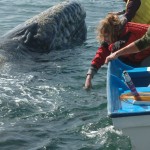
Well! We are back from our Baja adventures and the wonderful gray whales of the pacific lagoons. We all enjoyed ourselves enormously and the whale watching was superb. Gray whale calves nudging the boat along with it’s head and huge adult animals, 45 feet long and weighing in at around 40 tonnes lying next to the boat while excited whale watchers scratch the top of her rostrum and marvel at the barnacle growth around the enormous blow holes…
When exposed to this type of experience where one of the largest mammals on earth comes in close to a boat and allows it’s excited human inhabitants to lean out and rub their hands along the jawline and around the eye, with it’s calf right lying over it’s tail stock, it is hard to believe you are not in some form of virtual reality theme park. You are not though…
…these are wild animals that travel thousands of miles from their Alaskan feeding grounds to the warm and tranquil lagoon waters of Baja, Mexico to calve and rear their young during their early weeks…before making the return journey and running the gauntlet of predatory packs of killer whales in Monterey Bay and the rigours of a 5,000 mile journey into the cold waters of the Arctic.
Here are a selection of the images we took. Drop me a line if you are interested in our 2013 programme for watching Baja’s fabulous gray whales.
Westcorktimes.COM…There are few occasions where I am so impressed by an initiative that I wish to blog it…
BUT working out of Bantry, Clare Farrelly and David Forsythe have created the West Cork Times, www.westcorktimes.com a unique and unusual online presence that brings news, views and articles to West Cork locals and visitors and any others wishing to keep abreast of developments in West Cork. A logical and easy navigation backs up this well laid out site making perusal of the news a pleasure. West Cork Times is an online news hub covering issues from the environment to education and tourism to transport...over an area from Beara to Kinsale. The West Cork Times describes itself as a "hyperlocal website...Westcorktimes.com aims to be an online hub for West Cork with up-to-the-minute news and information for communities across the region. West Cork is a unique place and our aim is to deliver for West Cork the kind of unique, professionally produced web presence the area deserves. There are a number of exciting and innovative features planned for the website which will develop over the coming months. The site is locally owned by West Cork-based Wetrocks Media Ltd..." Without a doubt one of the really exciting new initiatives to be developed by West Cork Residents. What do you think
ENDS
GALWAY – 24TH MARCH – A must for all whale and dolphin watch operators…Whale & Dolphin Watch Operators Workshop
Whale & Dolphin Watch Operators Workshop
Benefit from sustainable practice, learn from your customers, and make more money!
Galway-Mayo Institute of Technology, Galway, Ireland, 9.00 – 17.30 Saturday 24th March 2012
I have long been an admirer of Dylan Walker and all that he has achieved. When I heard that he was teaming up with Ian Rowlands to form Planet Whale I thought, only good can come out of this. So with a spring in my step and suitcase packed I headed off to Brighton last November to attend the whale watch operators workshop held just before WhaleFest. My high expectations were entirely justified. Apart from being supremely competent organisers, Dylan and Ian have a firm handle on the key issues facing the whale watching industry worlwide. The operators workshop addressed such critical issues as reducing impact on marine wildlife and environment in general, meeting and managing customer expectations and getting involved in valuable research. The afternoon session provided one of the most meaningful learning experiences I have ever had.
Take it from me, the workshop being organised by Dylan and Ian for Galway on 24th March should be a must for any operator who takes his business seriously…hope to see you there.
BAJA, MEXICOWhale and Dolphin Watching Holiday – Baja California Sur – Mexico – February 25th – March 3rd 2012 – ASK NOW ABOUT OUR 2013 PROGRAMME
Avast there me hearties….
Want to leave behind the winter blues? Feel the sun on your back after all this rain? Feel the sand between your toes? AND see the Gray Whales of Baja, Mexico and their calves in the calving lagoons of Magdalena Bay? Then you know what to do…click on the link above
We are running a whale and dolphin watching holiday to Baja California Sur, Mexico – Saturday, February 25th to Saturday March 3rd 2012. This is a fully guided whale watching expedition with Nic Slocum PhD. A detailed resumé for Nic is provided below.
Our Mexican whale watching destination will be the lovely old town of Loreto which was the first Spanish settlement on Baja California Sur.The Spanish influence is still clearly evident in the old town. We will stay in the prestigious La Mision Hotel, widely considered to be the best hotel in Loreto, close to the historic district and overlooking the serene and calm Sea of Cortez; dubbed by Jacques Cousteau “The Aquarium of the World” due to it’s rich marine wildlife diversity. The Baja peninsular in Mexico is one of the finest destinations for whale watching in the world and February and March can furnish some superb sightings in the Sea of Cortez of blue, fin and humpback whales along with different dolphin species sometimes including the elusive killer whale. This provides an utterly unique and rare opportunity to view some of the largest mammals of earth.
One of the many highlights of this expedition is a visit to Puerto San Carlos and Magdalena Bay on the Pacific side of the peninsular to visit the birthing lagoons of the Pacific gray whale where close encounters with mothers and calves is a frequent occurrence and a superb opportunity for photographing and viewing these unusual animals. All boat based tours use local guides and expertise and adhere to current strict safety standards.
The unique local desert landscapes in this part of the Baja peninsular and the islands in the Bay of Loreto afford us good opportunities for the photographers amongst us.
Itinerary
Day 1. Saturday. Flight toLos Angeles arriving afternoon or early evening. Staying one night close to the airport in one of the excellent airport hotels – a chance to unwind, take a dip in the pool, have a nice meal or simply catch up on some sleep. We will fly down to Loreto the following morning – there is only the one flight a day to Loreto.
Day 2. Sunday. Mid morning flight fromLos Angeles toLoreto Baja,Mexico. A two 2 hour flight. Arriving early afternoon and settling into our hotel, La Mision on the Loreto waterfront, close to the old historic district. There are buildings in Loreto that date back to the 18th Century. Afternoon and evening free time to explore the area and get to know Loreto meeting at “La Palapa” for Marguerita’s and to discuss the weeks itinerary and activity programme.
Day 3. Monday. We take a boat based whale and dolphin watching tour out of Loreto looking for the great whales, fins and humpbacks. There is a good chance during February of catching up with the giant blue whale, the largest whale on earth. Several dolphin species frequent the area including bottlenose and common dolphins along with their larger cousins, pilot whales and killer whales. We have seen all these species in the Sea of Cortez.
Day 4. Tuesday. A day tour to Puerto San Carlos and the Magdalena Bay area on the Pacific side of Baja to see the Pacific gray whales and their two tonne calves! Although you can see the whales from the land here we hire a Panga (local boat) with a local guide and head out on the calm waters of the bay looking for these huge mammals. Prior to their arrival at Magdalena Bay these animals have made one of the longest migrations in the animal kingdom having travelled non stop from their northern feeding grounds in the Bering Sea all the way down to the bays and lagoons on the Pacific side of the Baja peninsular – a 12,000 mile round trip! The more inquisitive animals will approach the boat affording us excellent close viewings and sometimes the apoportunity to physically touch the calves.
Day 5. Wednesday. This day has a split option. Option one is to start early and head up into the mountains of the interior of the Baja peninsular, the Sierra de la Giganta, to visit the cave paintings, the Cuevas Pintas, in the rock shelters and canyons of these impressive mountains. Option two is to take a sea kayaking tour (suitable for beginners) along the spectacular coastline south of Loreto looking for that unusual seascape shot. Later there will be time for snorkelling in the shallows of the bay looking for Yellowtail and marvelling at the outstanding variety of colourful fish in this part of the Sea of Cortez.
Day 6. Thursday. A tour to Isla Del Carmen, one of the largest islands in the Bay of Loreto. After a boat based whale watching tour looking for all types of marine wildlife we will spend time exploring this fabulously beautiful island. The islands dotted around this part of the Sea of Cortez are stunningly attractive with unspoiled, sun drenched beaches and out of this world rock formations.
Day 7. Friday. Free time in the morning for final shopping in the old Spanish district of Loreto prior to making the short journey to Loreto airport for our evening flight back to Los Angeles.
Day 8. Saturday. Free day aroundLos Angeles followed by our flight home late afternoon or evening complete with sun tan and many memories.
Day 9. Sunday. Arrive home to the European weather! Sorry. But you will have memories of the hot sun on your back and lovely images of wildlife encounters with some of the largest animals that have ever lived on Earth…animals that many people will only ever dream about encountering!…
We still have spaces on this popular whale watching expedition and if you would like to be emailed a more detailed programme please email learn@thewildlifefilmschool.com
The cost of this week long opportunity is €1,950 (euro) which does not include the flight from Europe to Los Angeles.
What is included:
> Return flight from Los Angeles to Loreto on Alaska Airlines
> Hotel accommodation in La Mision, widely considered to be the best hotel in Loreto and in Los Angeles (hotel located close to the airport) on both the outward and homeward legs
> All food and boat tours and transport hire
What is NOT included:
> Flight from Europe to Los Angeles. Fares are reasonable at this time of year and we will help in reseraching the best airfares
> Items purchased while on holiday eg.Souvenirs
> Alcoholic beverages you might require
. Any tours or vehicle hire outside the published itinerary
The lead guide on this whale watching holiday will be:
Nic Slocum PhD
Nic is an experienced naturalist and wildlife guide and is best known for his escorted tours taking enthusiasts out, both in Ireland and overseas, to view and photograph whales and dolphins. Nic has maintained a lifelong passion the conservation of our wildlife and wild places and has appeared as an expert commentator on RTE, Channel 4 and ITV. A zoologist by training, Nic has published articles on conservation related issues in both regional and national newspapers. Nic Slocum lives and works in West Cork and is a director of Whale Watch West Cork which runs tours to watch whales and dolphins off the coast of southwest Ireland. Nic has been watching whales and dolphins from boats for over 25 years in places as far apart as New England, Argentina and New Zealand.
CLICK HERE FOR DETAILED PROGRAMME PDF
Whale Watching Holiday to Mexico
A roundup of the 2011 whale watching season in West Cork
A roundup on the 2011 season in West Cork…
The 2011 season kicked off with the most amazingly calm seas and lovely balmy weather, not really what you would expect for late March/early April off West Cork! These lovely conditions were accompanied by fabulous early sightings of adolescent minke whales moving well inshore to feed around the islands of Roaringwater Bay. We also had some of the earliest sightings of small groups of sub-adult common dolphins feeding in the sound between Cape Clear and The Fastnet Rock and Lighthouse. Frenetic reports of killer whale activity, possibly group feeding on a minke whale off The Mizen, early in April turned out to be a pod of around 50 Risso’s dolphins. Very easy to mistake them for killer whales with that disproportionately large dorsal fin. We encountered this species again during late April and May.
One memorable week in July stays with us when three minke whales commenced feeding close into the cliffs at the tip of Cape Clear Island affording us some lovely close encounters as we drifted, engines off. This “group” consisted of an adult, a sub adult and a calf which we think were related. The adult we believe was the mother of the sub-adult from a previous year while the juvenile was a youngster from the current year. We did not have hard evidence to support this other than the fact that we saw them together on several occasions throughout the season. This was some of the best minke whale watching we have had this year as we drifted on the ebbing tide watching these animals feeding beneath large flocks of Manx shearwaters and diving gannets, not more than a stones throw from the most southerly cliffs in Ireland.
Our West Cork leviathans, the mighty fin whale, put in an appearance during July feeding off their old haunts, The Galley Head and south of The Stag Rocks. This proved to be a rather short lived interlude but it was lovely to see the return of animals we have been following for the past several years through our non invasive photo ID project. The weather during the autumn, when we normally make a day long forays to the east to see this iconic species, hampered out efforts with gales setting in early September and not letting up much until the end of November. There is always next year! Whale watchers have to be the eternal optimists.
During the early fine weather we encountered some good sized basking sharks in the traditional haunts along the east coast of Sherkin Island, off Toe Head and throughout Roaringwater Bay, trawling for the phytoplankton blooms that occur in the shallow coastal waters during these early warm spells of weather. West Cork is one of the places where we encounter the unusual breaching behaviour in basking sharks and it is a spectacle to behold when these large four and five tonne animals launch themselves out of the water and create a splash like a depth charge going off when they re-enter the water. A sighting of a young basking shark during late August constituted a first for Whale Watch West Cork this year…this was the latest sighting of this species we have had off this part of West Cork during the last 10 years…normally basking shark activity has come to a stop by the middle of July.
One of the many highlights of the season was our numerous sightings of leatherback turtles we made off the islands between the Stag Rocks and The Mizen. The largest specimen we saw was over six feet long and the sight of these huge marine reptiles was a special treat as they are getting rarer and like so many marine species are under huge threat from the commercial fishing industry on a world wide basis, especially long line and gill net fisheries.
On the bird front we saw an increase in the numbers of Manx shearwaters, seeing increasing numbers as early as the first week of April and good numbers of juvenile gannets. Razorbill numbers during 2011 were up on previous years with the European guillemots and black guillemots maintaining their numbers. Puffin numbers still remain fairly low although sightings inshore rose slightly during 2011 on the previous few years. Although we suspect there may be a few breeding pairs of puffins on the islands along this part of the coast the absence of a significant breeding colony probably means that numbers will remain fairly sparce for this species in the immediate future.
With the memories of these lovely sightings during 2011 we look forward with anticipation to starting operations again during the last part of March 2012.
Tours depart at 9.30am, 2pm and 7pm daily from BALTIMORE HARBOUR. 4 hours tours and 2 hour tours. 7 days a week.
ENDS


![los_cabos_5[1]](http://www.whalewatchwestcork.com/blog/wp-content/uploads/2011/12/los_cabos_512-300x208.jpg)
![1050414231_c6e1c3df71[1]](http://www.whalewatchwestcork.com/blog/wp-content/uploads/2011/12/1050414231_c6e1c3df7111-300x225.jpg)
![lapaz-picture-of-mexico-5[1]](http://www.whalewatchwestcork.com/blog/wp-content/uploads/2011/12/lapaz-picture-of-mexico-511-300x259.jpg)
![photo_Avistamiento_de_Ballenas_BCSballenasexp_nt[1]](http://www.whalewatchwestcork.com/blog/wp-content/uploads/2011/12/photo_Avistamiento_de_Ballenas_BCSballenasexp_nt11-300x211.jpg)